Flat roofs get a bad rap they don’t always deserve. When they’re detailed properly and maintained with a light but regular touch, they can last decades without fuss. The trouble begins when shortcuts enter the picture. Essex has a healthy market of competent roofers, but it’s also seen its fair share of rushed jobs and improvised fixes. If you live under a flat roof in Chelmsford, Colchester, Southend, Harlow, or anywhere between, being able to spot poor workmanship can save you thousands and a season of stress.
I’ve spent years on roofs across the county — torch-on felt in Witham, EPDM in Brentwood, liquid systems in Leigh-on-Sea, and old asphalt in Billericay. The same pitfalls recur. This guide walks you through how good work looks, how bad work shows itself, and what to do when your roof starts sending warning signs. I’ll keep the jargon to a minimum and stick to what you can actually inspect, discuss, and decide.
Why flat roofs in Essex are their own beast
Local climate and building stock matter. Essex gets long spells of wind-driven rain off the Thames estuary and North Sea, baking summer sun on south-facing elevations, and sharp overnight temperature drops in winter. That combination punishes seams, flashings, and adhesives. Add in a huge variety of structures — 1930s extensions with shallow falls, box dormers on post-war semis, modern single-storey kitchen additions, and garden rooms that sprouted during the last decade — and you get roofs that look similar from the pavement but behave differently under load and weather.
Gravel finishes, black felt, grey single-ply, green-roof sedum trays: the material is just the start. Drainage, edge detailing, and tie-ins with the existing house fabric make or break longevity. Poor workmanship often shows where materials meet: upstands, rooflights, parapet caps, gutter transitions, and the lead where a flat roof tucks under slates or tiles.
What “good” looks like on a flat roof
Without a baseline, it’s hard to judge whether your flat roof repair is sound. A well-executed flat roof in Essex typically has continuous waterproofing with clean, confident seams; visible, deliberate falls to outlets; neat upstands; and compatible flashing materials. If it’s a felt or bituminous system, laps are straight and sealed, corners are dressed with pre-formed pieces or carefully cut reinforcement, and there’s no exposed raw edge to wick water. For EPDM, expect single sheets where possible, laminated corner units, and primer at terminations. Liquid systems should have even thickness, no pinholes, and reinforced matting at joints.
The roof surface shouldn’t pond for more than 24 to 48 hours after heavy rain. A coffee cup’s breadth of water sitting in a shallow saucer is acceptable in places, but bird baths a metre across are telling you the falls were guessed at, not calculated. Upstands should be at least 150 mm above the finished roof level unless detailing allows otherwise. And the terminations where the roof meets brickwork should involve chase cuts and appropriate flashing, not a smear of mastic and hope.
The most common signs of poor workmanship
Patterns repeat. Whether the job was a bargain quote for flat roof repair Essex or a “mate’s rates” lash-up, problems tend to show in specific ways.
Trapped air blisters under felt or single-ply are a classic giveaway. They come from laying membranes onto damp substrates, overheating bitumen, or poor rolling technique. Early on, they look like small domes. With heat, they grow, and with foot traffic, they crack, becoming miniature paddling pools that leak on the first freeze-thaw cycle.
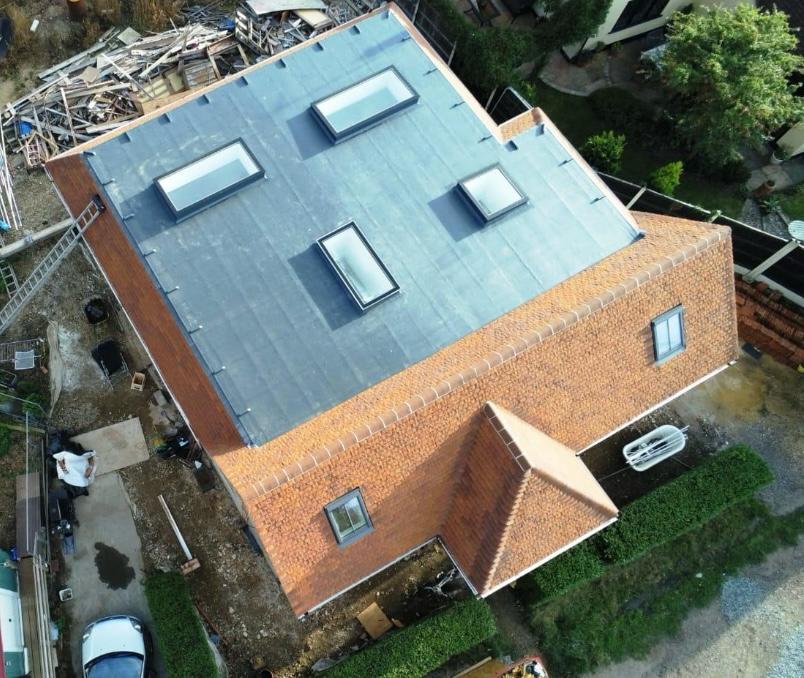
Failed seams and fishmouths — where the edge of a felt layer lifts and curls like a fish’s open mouth — point to inadequate heat, dirty laps, or rushing in cold weather. You can often lift the lip with a fingernail. Water will do the rest.
Ponding tells its own story. A newly repaired roof that holds water in fixed basins wasn’t laid to fall. Contractors sometimes say “flat roofs are flat,” then shrug. They’re not supposed to be. Even a modest fall of 1:80 guides water to an outlet. If outlets are too few, too small, or placed higher than the surrounding surface, the ponding is baked in.
Messy or mismatched flashings are another red flag. Lead should be chased and wedged into mortar joints, dressed with a neat drip, and left unpainted. Aluminium trims should be the right profile and fixed with stainless screws and colour-matched caps. If you see silicone smeared where the roof meets brick, or a felt layer glued straight to dusty masonry with no chase cut, expect trouble within a winter.
At rooflights and lanterns, look for pre-formed corners, continuous upstands, and clamping bars with intact gaskets. Gaps under the frame, exposed screw heads without caps, or foam sprayed into view suggest a repair that patched symptoms, not causes.
Finally, the deck tells tales. Spongy underfoot areas signal saturated timber or failing insulation. A roof shouldn’t feel like a trampoline. If the deck wasn’t inspected during a repair, that’s a missed step. In Essex’s older housing stock, asbestos-cement sheets appear on outbuildings; they require particular handling. Anyone who drilled or ripped those sheets without controls likely cut corners elsewhere.
Materials choices that set you up for failure
Every system has strengths and weak points. Poor workmanship often starts with selecting the wrong material for the way the roof is used, then compounds with casual installation.
Torch-on felt can perform well if each layer is bonded properly and the installer respects heat levels and sequencing. The cheap trick is to lay a single cap sheet M.W Beal & Son Roofing Contractors roof repair mwbealandsonroofing.co.uk over whatever’s there, warm it enough to stick, and walk away. That saves hours but leaves you with seams that barely adhere and no robust base. Essex sees plenty of “one-layer wonders” sold as full repairs.
EPDM rubber thrives in large, simple rectangles with minimal penetrations. On complicated shapes with multiple angles, dormer cheeks, and pipes, it needs skilled detailing and the right pre-formed parts. Being tempted by an attractive price for flat roofing Essex when your roof is more like a jigsaw than a doormat often ends with adhesive failures and patched curves.
GRP (fibreglass) looks crisp when done well and suits warm roofs on rigid decks. It’s sensitive to weather during installation. Laid in cold, damp air, resins don’t cure properly. You’ll get pinholes and brittleness. Fibreglass slap-dashed over old felt or flexing boards cracks along joists within a year. I’ve peeled entire sheets that came up like a bad sunburn because the primer step was skipped.
Liquid-applied systems bridge awkward shapes and allow seamless finishes around rooflights. The problem arises when contractors treat them like paint. Brush on, tick box, onto the next job. Without reinforcement matting, correct film thickness, and sound substrate prep, they chalk and split. If you can see the texture of the board beneath, it’s too thin.
How corners, edges, and penetrations should be detailed
Corners concentrate stress. When a roof expands and contracts — and it will — energy finds weaknesses. Cracked internal corners or starburst fractures at external corners betray detailing that relied on a single layer and hope.
At parapet walls, the membrane should run up the face, over the top, and down the other side, or meet a properly designed metal cap. Exposed cut edges invite water. On eaves, drip trims must stand proud enough to encourage runoff. If the trim sits lower than the membrane line, you’ll get a permanent wet line at the edge.
Pipes, vents, and flues are another tell. Pre-formed collars exist for most systems. Carving a cross in the membrane and gluing it around a pipe with mastic is a stopgap, not a repair. Those incisions become leaks when the pipe vibrates or settles.
Where flat roofs meet pitched sections, the abutment is the test. Properly, the flat roof upstand climbs the wall, a lead or compatible flashing sits in a chase-cut joint, and the pitched roof’s underlay and tiles tuck correctly. I’ve lifted many a slipped tile to find felt lapped over the top of the lead rather than under it, a small reversal that funnels water into the structure during wind-blown rain.
Ventilation, insulation, and condensation — the hidden culprit
Not every leak is a leak. Wet patches, stained plasterboard, and dripping nails in a loft space can result from condensation, especially after a repair that changed the roof build-up. Cold roofs, where insulation sits between joists and the deck is ventilated above, need clear cross-ventilation. Warm roofs, with insulation above the deck, rely on airtightness below. Mixing elements without thought traps moisture.
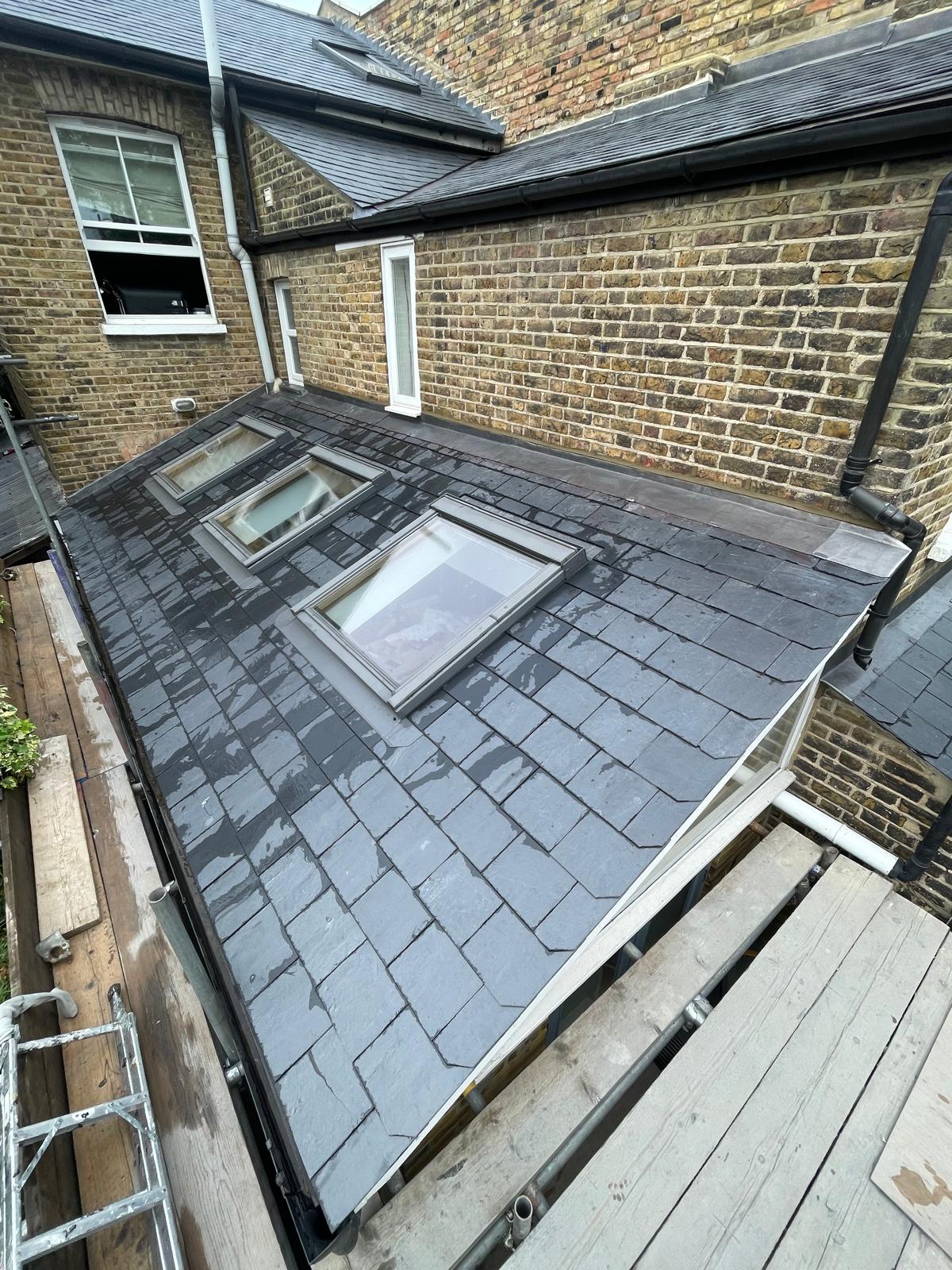
A common mistake during flat roof repair Essex is sealing the top with a new membrane, adding a bit of insulation here and there, and blocking the old ventilation paths. Come January, internal moisture rises, hits the cold deck, condenses, and rains back. If you see mould lines along joists or black spotting on ceilings after a repair, suspect condensation. The fix isn’t more felt; it’s correcting the build-up.
Drainage: the unglamorous foundation of reliability
Water that leaves can’t leak in. Simple to say, surprisingly hard to execute when the original extension was built dead-level and the builder relied on guesswork. Good roofers form falls with tapered insulation on warm roofs or firrings on cold roofs. Bad ones lay flat and cross their fingers. Outlet positions matter just as much. Scuppers through parapets should be set lower than the surrounding area; internal outlets need sumps and strainers. If leaves from a nearby oak clog the only outlet, your roof is a paddling pool until you climb a ladder.
I’ve seen kitchens in Rayleigh ceiling-stained by water that never penetrated the membrane at all. It crept across under the flashing, found a tiny gap in mortar, and tracked along. Proper downstands and maintenance would have prevented it. When you inspect, look for sediment rings on the surface. They map where water sits and for how long.
What warranties really mean in practice
Paper promise is not the same as practical protection. You’ll hear of 10-year, even 20-year warranties. The value lies in who backs them. A manufacturer-backed warranty on a named system installed by an approved contractor carries weight. A handwritten “guarantee” from a sole trader who changes phone numbers each spring does not.
Read the fine print. Many warranties exclude ponding, foot traffic, or any alteration by others. Some require annual maintenance logs to stay valid. If you’ve invested in a new system for flat roofing Essex, set a calendar reminder for a quick yearly check and a photo record. It’s minimal cost that preserves your leverage.
How to assess a roofer before you hand over the deposit
Price matters, but patterns matter more. In Essex, the spread for a like-for-like flat roof replacement typically ranges within 20 to 40 percent between reputable firms. Quotes wildly below that bracket signal missing steps or materials.
Ask for specifics: deck inspection and repair policy; insulation strategy appropriate to your property; fall formation plan; details and brand of membrane; how they intend to handle abutments, outlets, and penetrations; and disposal and access provisions. A competent contractor can talk through sequencing and show photos of similar jobs nearby.
If the contractor proposes a quick overlay, press for justification. Overlays can be perfectly acceptable on sound, dry substrates with adhesion tests and moisture checks. They are unacceptable over wet boards, blisters, or failing details. On older extensions, insist that they confirm joist spacing and deck type. If there’s any suspicion of asbestos cement, the conversation must change.
A quick homeowner’s check after any flat roof repair
- Walk the surface gently and feel for spongy areas that indicate rot or delamination. Look along seams and edges for uniform adhesion, no fishmouths, and tidy corners. Hose or water-can test drainage: water should head to outlets within seconds, not sit. Inspect flashings and trims: chase cuts neat, fixings capped, no exposed raw edges. Photograph the rooflights, outlets, and abutments for your records and warranties.
Case notes from around Essex
A dormer in Brentwood, re-covered with EPDM: The roofer used a single large sheet, which is fine, but skipped primer at the drip trim and tried to glue the rubber straight to powder-coated aluminium. Within three months, wind lifted the edge like a sticker. The repair involved cleaning back, applying the correct primer and tape, and re-rolling with a proper seam roller. A half-day fix that should have been done first time.
A kitchen extension in Colchester with a felt overlay: The team laid a cap sheet over an existing bubbled base, didn’t cut out blisters, and missed a sag in the deck. The roof looked fresh for a month. Then ponding formed in two obvious basins, and blisters grew like mushrooms. Correcting it required stripping to the deck, replacing two sheets of rotten OSB, installing firrings to create fall, and rebuilding with a two-layer system. The overlay saved nothing in the end.
A fibreglass roof in Southend laid in November: Cold, damp air stalled the cure. The surface stayed tacky for days, collected grit, and developed a rash of pinholes. Come spring, microcracks formed over joists. We reworked it in warmer, dry conditions, switching to a warm-roof build-up with tapered insulation and a manufacturer-specified winter resin. The difference was night and day.
The Essex-specific pitfalls to keep in mind
Coastal exposure beats up western edges on properties in Leigh, Shoebury, and Walton. Wind-driven rain will find any upward-facing seam. In these zones, I avoid details that rely on exposed lap edges and favour fully bonded systems with robust trims and mechanically fixed terminations.
Trees are another quirk. Many suburban Essex roads are lined with mature oaks and planes. Gutters and outlets clog in a week during autumn. If your roof has only internal outlets, consider adding a secondary scupper or a larger downstand with a removable basket. A blocked outlet is a workmanship problem if no provision was made for maintenance access or overflow.
Lastly, extensions that have been added in stages create oddities: mismatched heights, step-downs under patio doors, and tight upstand space. The minimum 150 mm upstand clashes with low thresholds. There are solutions — threshold drainage channels, proprietary combined threshold and upstand systems — but they require careful planning. If a contractor shrugs off the upstand clearance and promises “we’ll seal it,” expect callbacks.
When a leak appears, diagnose before you demolish
Panic leads to poor choices. Water stains on a ceiling don’t always sit directly under the entry point. The flattest path can be sideways along a joist. Before you authorise a full strip, push for a smoke test, dye test, or at least a methodical hose test in sections. Start at the lowest point and work up. Check obvious suspects: outlets, penetrations, abutments. Lift a small area at the downstand if needed rather than tearing up the entire field.
For flat roof repair Essex emergencies after a storm, temporary measures are fine. A patch of compatible membrane or a properly applied cold-applied patch kit can buy time. Avoid gobs of silicone; they rarely adhere to bitumen or EPDM long-term, and they make later repairs harder. If you must tarp, pull the tarp tight and create runoff, don’t just cover the wet area.
The true cost of a “cheap” repair
On paper, the difference between a £900 overlay and a £1,800 thoughtful refurbishment looks large. Over five years, it’s not. The cheaper job often fails within two winters. Add two callouts at £150 each, a ceiling repair at £300, redecorating for £250, and the original £900 feels like the deposit on doing it properly. The higher upfront cost that addresses falls, deck condition, and details typically buys peace of mind for a decade or more.
Essex homeowners move on average every seven to ten years. A documented, warranted flat roof becomes a selling point. A buyer’s surveyor will notice ponding and poor flashings. You can either negotiate from strength with a file of photos, invoices, and warranty certificates, or watch a buyer ask for a hefty reduction.
Coordinating with other trades and future-proofing
Flat roofs don’t live in isolation. If you’re adding a rooflight, solar PV, or a lantern, involve the roofer early. I’ve been called to seal around PV rails drilled through a brand-new membrane by an installer who had no drawings and guessed at joist positions. A 20-minute conversation and a few timber noggins would have saved a day of remedial work.
Plan for maintenance. If the only way to clear leaves from an internal outlet is to crawl through a loft hatch and contort yourself, you won’t do it as often as you should. A simple hinged leaf guard or an accessible scupper basket pays back quickly. If you’re fitting a sedum green roof, ensure your waterproofing system is root-resistant and that edge trims can handle the load and drainage.
How to brief a contractor for better outcomes
Clarity helps both sides. Share what you know: any previous leaks, areas of ponding, cold rooms below, or condensation signs in winter. Ask for a short written scope that includes the roof build-up, fall strategy, deck repair policy, insulation type and thickness, outlet treatment, flashing method, and disposal. Agree how they will protect the house during works — dust sheets, access routes, parking — and how they’ll handle rain events mid-job.
Request mid-project photos: deck condition after strip, any rot found and replaced, falls being set, details at outlets, and the finished seams. These aren’t vanity shots; they become your record and evidence if warranty queries arise.
Two quick realities about maintenance
- A flat roof that’s inspected and cleared twice a year almost never fails without warning. Ten minutes in autumn and ten in spring save hundreds. Small defects caught early are cheap. A lifted corner today is a £60 fix. Left a season, it’s a saturated deck and a ceiling patch.
When to repair and when to start over
Repairs make sense when the membrane is broadly sound, the deck is dry, and defects are localised: a split seam, a failed corner, a single outlet issue. Spot repairs should use materials compatible with the existing system, and the installer should feather and reinforce patches, not slap rectangles over problems.
A replacement is smarter when you have widespread blistering, chronic ponding tied to a sagging deck, multiple prior patches of mixed materials, or any sign that the build-up is wrong for the structure — for example, a cold roof with blocked ventilation and mould. If you can press a finger near an outlet and feel give, the rot has started. At that point, the money spent chasing symptoms could fund a proper warm roof with tapered insulation, new outlets, and clean details. Over time, the improved thermal performance trims heating bills enough to be noticeable.
Choosing between felt, EPDM, GRP, and liquids for Essex homes
There isn’t a single best system. Felt (SBS-modified bitumen) remains a robust choice for complex roofs and those needing multiple layers and redundancy. It tolerates foot traffic better than some. EPDM suits large, simple spans with minimal penetrations and delivers long service life when detailed properly. GRP gives a crisp look and seamless finish on rigid decks and warm roofs, but demands good weather and technique. Liquids shine on refurbishments where penetrations, curves, and awkward tie-ins abound.
Base your choice on roof shape, expected foot traffic, exposure, and who will maintain it. If you want a green roof later, choose a system rated for root resistance or design in an additional root barrier. If you need to mount PV, ensure there are provisions for ballast or mechanically fixed rails without compromising the membrane.
A final word on trust and verification
Most roofers who stick around in flat roofing Essex work hard, stand by their jobs, and earn referrals. The few who undercut by skipping unseen steps cause outsized damage. You don’t need to become a roofer to protect yourself. Learn what good looks like at seams, edges, outlets, and upstands. Insist on reasoned choices about materials and build-ups. Ask for photos and paperwork that tie the work to a known system and standard. And give your roof the small, regular attention that keeps surprises at bay.
Roofs fail for reasons, not at random. If you read the signs and act with a bit of discipline, your flat roof will fade into the background of your life — which is exactly where a roof belongs.